

TL;DR When a speech model stumbles, the cause usually hides in the dataset rather than the architecture. You can keep retraining the network, but weak audio caps how far it goes. The cure is purpose built audio data collection and voice data collection drawn from verified speakers, captured in realistic conditions, and labeled by people. Humyn Labs scopes that data to your brief and ships a plan plus sample recordings within 48 hours.
Why Your Speech Model Keeps Failing?
Audio models break down when their training set is scraped, machine generated, or short on genuine speakers. The remedy is custom audio data collection and voice data collection from identity checked humans, recorded in settings that mirror your deployment, then annotated and quality reviewed before it touches your pipeline.
The Model Works Fine. The Audio Does Not
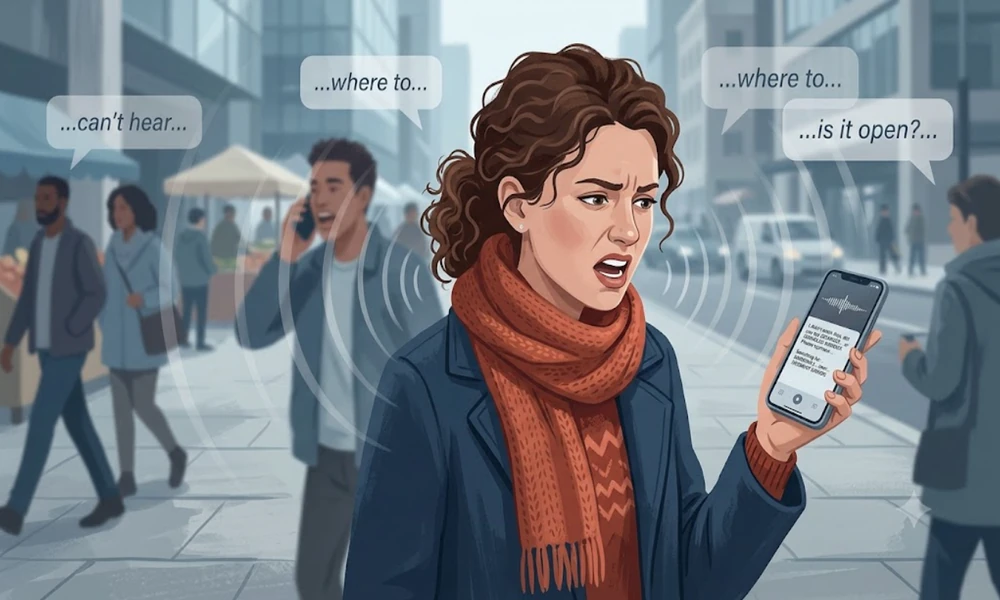
Imagine you launch a voice assistant. The demo goes perfectly. Then a caller with a strong regional accent speaks, and the whole thing unravels. Street noise leaks in. Two voices overlap. Someone flips between Hindi and English in a single breath, and the model simply gives up.
So you reach for the usual lever. You adjust the architecture, stack on more layers, hunt for a larger model. And the accuracy barely budges. Here is the uncomfortable truth most teams skip past. The network is healthy. The training data is what let you down.
Quality speech data shows a model how real humans actually sound. Poor data feeds it an imaginary version of speech that never appears once it goes live. You can see how Humyn Labs frames this work over on the Humyn Labs homepage.
What Weak Audio Quietly Costs You
Thin audio does more than nudge a metric downward. It drains budget. Teams pour months into scrubbing noisy datasets that still lack the speaker range their models depend on. The bill shows up as broken launches, wasted compute, shaken user trust, and churn you can read straight off the revenue line.
And the stakes climb every quarter. The global speech and voice recognition market stood at USD 9.27 billion in 2025 and is forecast to reach USD 10.32 billion in 2026, heading past USD 27 billion by 2035. Roughly 62 percent of consumers already favor talking over typing. Mishear them once, and many never come back.
How to Spot Bad Audio Data Fast
A weak dataset gives itself away once you know what to look for. Hold your own data up against this checklist:
- Scraped clips with no consent record. No paper trail, real legal exposure.
- Machine generated voices that iron out variation. They sound tidy and act nothing like people.
- Gaps in accents and dialects. The model meets reality and crumbles.
- A single pristine studio take with no real noise. Production is never that silent.
- Messy or uneven labels. The model confidently learns the wrong thing.
- Little speaker diversity. Same voices in, same bias baked right in.
See your own dataset in that list? Plenty of teams do. Closing that gap is exactly what disciplined audio data collection exists to handle.
Where Off-the-Shelf Sets and Crowd Platforms Break Down
Open datasets such as LibriSpeech and Common Voice tilt heavily toward English, run shallow on demographics, and ship with awkward licensing. They are also recycled endlessly, so every team trains on the same tired audio.
Crowd platforms carry a separate weakness. Recording quality swings wildly, speaker metadata goes unchecked, and you get no grip on how accents or dialects are spread. Players like Appen, Scale, iMerit, Labelbox, Toloka, Telus International, Sama, and Defined.ai run real scale, yet anonymous crowds and self reported demographics leave you guessing about who recorded your voice data. Humyn Labs flips that. Each speaker is identity verified, and their track record is logged openly, which you can follow on the how Humyn Labs works page.
Audio Data Collection vs Voice Data Collection. The Difference Matters
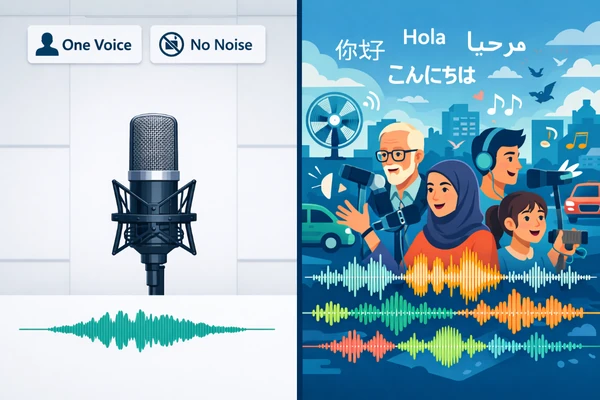
People toss these terms around like they mean the same thing. They do not. And the gap between them decides what you actually gather.
Audio data collection spans the whole sound environment. Ambient noise, machine hum, events, overlapping speakers, the messy acoustic world a device truly lives in.
Voice data collection narrows in on human speech. Accents, intent, emotion, conversational flow, the way real people genuinely talk.
Most production models want both. An ASR system, the engine that turns speech into text, will gag the moment a fan whirs or traffic rolls by if it only trained on spotless voice clips. Humyn Labs covers the speech side through voice data collection and the wider sound environment through end to end data collection services.
Side by Side
| Factor | Audio Data Collection | Voice Data Collection |
| Focus | Whole sound environment | Human speech only |
| Captures | Noise, events, overlapping speakers | Accents, emotion, conversation |
| Best suited to | Robust ASR, sound events | TTS, voice cloning, ASR speech |
The Fix. Custom Audio and Voice Data Shaped Around Your Model
Here is the move. Rather than grabbing a generic pack and praying it fits, you order data built around the precise failure your model keeps showing. A managed collection project hands you:
- Real speakers across the exact demographics you serve.
- Controlled acoustic settings matched to where your model actually runs.
- Verified consent and provenance on every single file.
- Accurate human labeling reviewed by people, not scripts alone.
- Scope drawn around your edge cases, not a vendor catalog.
So how does a project like that actually run?
Inside a Humyn Labs Collection Project
The flow stays deliberately simple. Three clear stages:
- Set the spec. You name the languages, accents, demographics, audio format, and utterance types. Together you turn that into a recording plan.
- We source and record. Verified speakers record to your specs in controlled rooms. Identity and demographics get confirmed before any session begins.
- QC, annotate, deliver. Every file clears audio QC for noise, clipping, and transcript alignment, then peer review and central QC, handed over in your format with full metadata.
Want 500 hours of Hindi female speakers aged 25 to 35 with Rajasthani accents? Humyn Labs sources precisely that across 50+ languages, with deep reach into Indic languages. And this is the part that sets it apart. A collection plan and sample recordings land back with you inside 48 hours, so you never sit idle waiting to confirm fit.
Privacy and Consent Locked In From Day One
Compliance is never an afterthought here. Each speaker signs verified informed consent. Data handling tracks GDPR and regional privacy rules. Usage rights read clearly from the outset. That weight grows every quarter, since close to 63 percent of buyers in this field rank privacy among their biggest worries. Humyn Labs treats provenance as a feature, which strips out risk instead of piling on paperwork. The approach is laid out on the About Humyn Labs page.
What Shifts Once the Data Is Right
Fix the data and the model quits fighting you. Accuracy lifts across accents and noise. Edge cases that once failed start clearing. The route to production shortens, because you stop patching holes and start shipping.
Put plainly, before and after. Before, your ASR loses 1 word in every 5 from a regional speaker in a noisy room, so the transcript reads like guesswork. After targeted voice data collection tuned to those exact conditions, it holds steady and your support queue thins out. You can measure that win.
The Business Wins That Follow
- Lower rework cost. Less scrubbing, more shipping.
- Faster deployment cycles. Train on milestone batches as they arrive.
- Stronger retention. Users stick around when the product gets them.
- Defensible performance. Verified, auditable data you can stand behind.
Common Mistakes to Avoid
Steer clear of these traps: prizing raw volume over relevance, skipping consent to save a few days, ignoring the acoustic match between data and deployment, leaning on synthetic audio as a full stand in for real speech, and collecting once then letting it go stale. Each one quietly pulls your model back down. Dodge them, and your audio data collection keeps compounding in value.
Frequently Asked Questions
What makes speech models lose accuracy?
Most accuracy slips come back to the training data, not the architecture. When the audio is short on accent variety, real background noise, or precise labels, the model never learns how people genuinely sound. Custom audio data collection matched to your deployment removes the root cause.
How does audio data collection differ from voice data collection?
Audio data collection captures the entire sound environment, noise, events, and overlapping speakers included. Voice data collection concentrates on human speech such as accents, emotion, and conversation. Most production models need both to survive real world conditions.
Is custom collection worth it over off-the-shelf datasets?
For production work, yes. Open datasets lean toward English, run thin on demographics, and carry licensing limits. Custom voice data collection matches your exact languages, accents, demographics, and quality specs, so the model trains on data made for your case.
How are privacy and consent managed in audio data collection?
Every speaker gives verified informed consent before recording starts. Data handling follows GDPR and regional privacy rules, with usage rights clear from day one. Humyn Labs bakes consent and provenance into each project rather than tacking it on afterward.
How quickly can a custom audio project begin?
Humyn Labs sends back a collection plan and sample recordings within 48 hours of receiving your spec. A pilot of 50 to 100 hours usually runs two to four weeks, and large multilingual collections arrive in milestones so you can train on early batches.
Which languages can Humyn Labs cover?
Humyn Labs handles 50+ languages, spanning major global languages and low resource ones, with strong depth in Indic languages like Hindi, Tamil, Telugu, Kannada, Malayalam, and Bengali, plus dialect and accent specific collection inside them.
Stop Tuning the Model. Repair the Data
You can keep piling on layers. Or you can hand the model audio that mirrors the people it serves. The second route runs faster, and it actually survives production. Real speakers, real conditions, clean labels, full consent. That combination turns a brittle model into one you trust.
Tell Humyn Labs the languages, demographics, and recording specs you need. A collection plan and sample recordings come back inside 48 hours. Talk to Humyn Labs and scope your dataset today.
